
Most institutional investors have piled into private credit over the last 15 years, in a bid to diversify their broader fixed income exposure. Direct lending has been the favoured route...and it’s been a boon. Higher interest rates in recent years have driven returns for senior secured, mezzanine and unitranche loans into double digit territory.
But here’s the issue: direct lending has a 0.85 correlation with broadly syndicated loans and high yield bonds.
Investors are paying for illiquidity but not getting true diversification.
Even if allocations are focused across lower middle-market, middle-market, upper middle-market, sponsored, non-sponsored deals, they are essentially getting illiquid exposure to the same underlying risk - corporate cash flows that move with business cycles. LPs who committed billions to a stable of five to 10 direct lending managers, have, in effect, constructed a portfolio with the correlation properties of a single asset class.
This is where asset-based lending (ABL) comes in.
To many, it's the next big frontier for private credit.
What's more, evidence suggests it also provides significant correlation benefits.
Bruce Richards, CEO and co-founder, Marathon Asset Management explains that ABL has a 0.4 correlation with direct lending, “which tells you they're relatively uncorrelated, because you have, on the one hand, cash flow lending, versus lending against hard assets with an LTV attachment point."
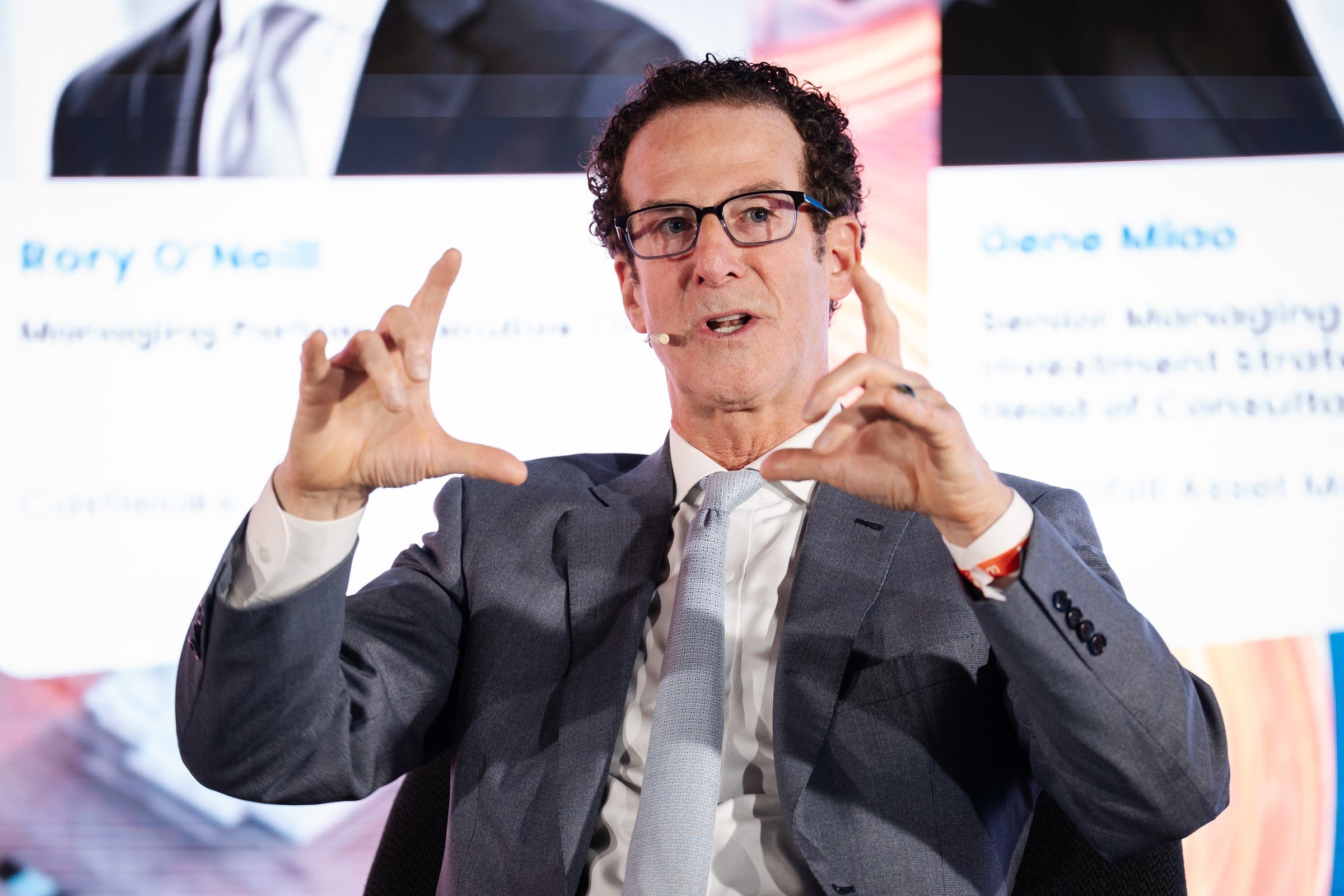
Photo: Bruce Richards, CEO of Marathon, on stage at IPEM Global. Source: IPEM
The total addressable market for ABL (excluding commercial real estate) is estimated to be $20 trillion and with private credit projected to reach $2.6 trillion by 2029, asset-based strategies are expected to be one of the higher-conviction growth areas.
Marathon's approach to ABL reflects two decades of experience and $35 to $40 billion in deployment, lending against hard assets including aircraft, maritime vessels, rail equipment, industrial machinery as well as intellectual property.
Rather than relying on a single deal flow source, investors like Marathon have sought to capture opportunities through multiple origination channels including direct company sales/leasebacks, sponsor relationships, bank partnerships, origination partners, and OEM financing.
It is by combining the unique, uncorrelated attributes of ABL with direct lending that one can achieve meaningful diversification in their portfolio.
As Richard explained, the firm's competitive advantage is rooted in the "complexity premium": the additional return earned for structuring bespoke transactions that can't be easily commoditised or replicated.
ABL offers a complementary return profile alongside direct lending and opportunistic credit. Currently, it remains a space where specialised knowledge, established relationships, and the willingness to navigate complexity still generate meaningful excess returns.
As ABL comes of age, are you exploring the correlation benefits in your own portfolio?


.png)
.png)