
 A favourable landscape
Current market conditions are proving supportive for emerging manager investing, driven in part by continued consolidation and asset gathering among large, established platforms. Across Europe, an increasing number of high-quality teams are coming to market, while several first-time funds have reached final close in 2026; evidence of sustained allocator appetite as portfolios balance established managers with newer entrants.
As Kim Pochon, Head of Primary Investments at Sagard Private Equity, notes: “Every person who attended the Emerging Manager Summit learned something new and heard something original.”
Sagard hosted a series of in-depth discussions, alongside three dedicated “Meet the GP” presentation sessions, at the Emerging Manager Summit, during IPEM Global and judging by the number of attendees it attracted strong interest.
Each session featured three emerging managers.
Rather than delivering unstructured five-minute presentations, GPs responded to a consistent set of questions, providing the ideal platform to hone their pitch presentation. “It was like a structured interview,” says Pochon.
By encouraging GPs to articulate differentiated perspectives on their investment strategies, Sagard’s aim was to facilitate more meaningful comparisons across managers and highlight the distinct characteristics of emerging platforms.
“It was a full house and we had a lot of good feedback. In five minutes, people could really understand what the GPs’ value proposition was. They could easily compare and contrast each of them because they were asked the same set of questions within the same set time. Attendees also enjoyed hearing our latest research and appreciated the quality of the panellists who spoke. It proved to be a winning formula,” adds Pochon.
Emerging managers remain a critical component of the private equity ecosystem, supporting innovation and strategy diversification. Niche approaches with the potential to scale over time can provide a useful counterbalance to larger, more established strategies. In this context, emerging managers can complement allocations to larger, established platforms by providing exposure to differentiated strategies, sectors and investment approaches.
Part of the summit’s objective, says Pochon, was to examine common misconceptions around emerging managers, such as their risk profile and the additional underwriting considerations associated with newer platforms.
“Our aim was to select and showcase a number of exciting firms within the global landscape, who we are not invested with,” explains Pochon.
“We had one fund investing in technology scale ups, one investing in the supply chain of leisure and entertainment businesses, another was investing in longevity. It was a very broad selection. Also, we featured a fireside discussion (entitled Climbing the Summit - an emerging to established manager story) with one of our previous emerging managers who has now became a rock star.”
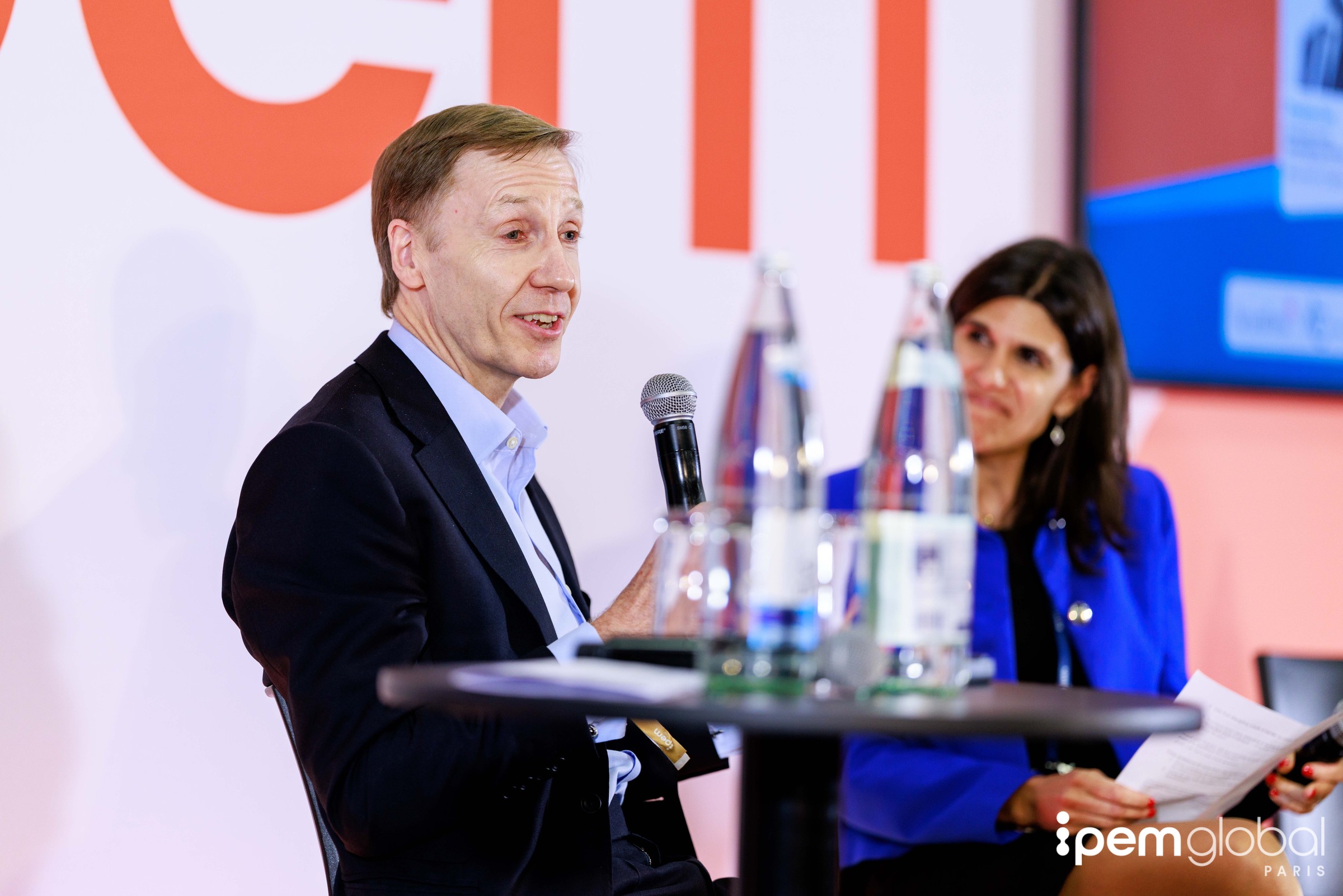
That person was Charles Ind, co-founder and Managing Partner of Bowmark Capital, a UK mid-market private equity firm with over GBP2 billion in AUM. Ind shared first-hand insights with the audience on the challenges of building a successful platform.
Narrowing the funnel
One of the themes discussed during the summit was generalists versus specialists and how this can ultimately change a fund’s DPI.
“Bowmark Capital has narrowed its strategy over time by regularly reflecting on what it is good at after starting out, like many PE firms, as a generalist. Their next evolution was to focus on a few sub-sectors or verticals within technology and business services; more top down and less bottom up. After starting life as a generalist, Ind reflected on how real success comes from narrowing the funnel,” says Pochon.
Additional sessions at the Emerging Manager Summit included “Emerging Managers: Defining Tomorrow's Private Equity Landscape” and “Emerging Managers: Convergence or Divergence Across the Atlantic?”
Sagard Private Equity invests across primaries, secondaries, and co-investments, managing more than $23 billion in private equity assets. Its Emerging Manager Programme focuses on managers with less than $500 million in AUM. Over the past three decades, the team has assessed a broad universe of emerging managers, with a preference for specialist strategies capable of scaling over time.
“We have a strong belief that specialists can offer advantages in certain markets,” says Pochon. “When you're specialised around a sector or a theme like medtech, for example, you can find medium sized companies, large companies. Then the GP needs to go through the journey and prove that they can manage bigger companies because it's a different playbook, a different way to approach it. We believe this is a key recipe. If your specialisation is limited to small-cap companies you become boxed in under that definition. The same is true for country-focused strategies. How can you scale?”
At the same time, continued concentration of capital among large managers is contributing to favourable conditions for spin-outs. Investment professionals may seek to establish independent firms where strategy drift, increasing deal sizes, or reduced operational focus limit their ability to execute effectively within larger platforms.
Fundraising pressures have also played a role. Some established managers have closed below target, while portfolio performance has been affected by recent macroeconomic shocks, reducing anticipated carried interest outcomes. For some investment professionals, this has prompted reconsideration of independent platform formation.
Strategy refinement remains critical
Launching a private equity firm remains challenging, despite improving conditions.
As Pochon explains, having a strong pedigree is important “but it’s not enough”. Replicating a prior strategy without clear differentiation may not be compelling to LPs.
“We like emerging managers who say, ‘I had great experience at my previous firm and this is how I want to refine the investment strategy. The best deals had these characteristics.’ That’s what gets us enthusiastic. However, if you do something completely different then LPs will never follow you. You need to find a balance.”
As the number of new entrants increases, allocators face a broader opportunity set. However, underwriting emerging managers requires a distinct approach, often placing greater emphasis on qualitative factors and extensive referencing.
As Pochon emphasises: “You need to make a lot of reference calls to get the full story.”
Allocators willing to commit the necessary time and resources may identify differentiated investment approaches and be able to access differentiated sources of return, although this requires a long-term perspective.
“Emerging managers that we meet want to do things right and have a lean and scalable setup from the outset. It is helpful that a number of service providers have developed turnkey solutions for these new managers, which for us is very comforting. When we know the set of advisors and third party providers that they have hired, we feel already quite good about it (from an ODD perspective),” explains Pochon.
Free from legacy constraints
With nine managers presenting at the Emerging Manager Summit, allocators had a unique opportunity to assess a range of emerging strategies as they consider portfolio construction across both established and emerging managers.
“Our message is you need to get exposure to both emerging and established managers.
“Alignment with emerging managers is typically very high. For many emerging managers, meaningful financial success depends on earning carried interest rather than management fees alone. There may be no plan B. Furthermore, they don’t have a legacy portfolio to manage. They can focus their brain power sourcing good companies and executing the value creation plan,” concludes Pochon.


.png)
-1.png)